


Anchoring the global commons
The synergy between China's next five-year plan and the Global Governance Initiative recharts global cooperation









The deliberation and approval of the Recommendations of the Central Committee of the Communist Party of China for Formulating the 15th Five-Year Plan (2026-30) for National Economic and Social Development marks a critical juncture for China and the global order. The final plan will be more than a domestic economic road map; it will serve as an integrated strategic blueprint designed to anchor China's next phase of modernization, stabilize the global economy and operationalize a collaborative vision for global development amid interconnected crises.
The 15th Five-Year Plan will cement China's transition away from the export-led model of the past toward institutionalized "high-quality development". This paradigm shift will rest on three core pillars: innovation, demand-side restructuring and green transformation.
In terms of technological resilience and innovation, and in the context of growing technological competition, the recommendations prioritize achieving self-reliance and breakthroughs in core technologies. Building upon an R&D intensity of 2.69 percent of GDP in 2024, the 15th Five-Year Plan is expected to set an ambitious target of at least 3.2 percent. Strategic focus will be placed on frontier areas such as artificial intelligence, advanced semiconductors, biotechnology and new materials. The successful scaling up of industries such as electric vehicle battery production, demonstrated by global leaders such as CATL and BYD, provides a template for ensuring the security and resilience of critical industry and supply chains across strategic sectors. This proactive strategy is designed to immunize China's modernization drive against decoupling pressures.
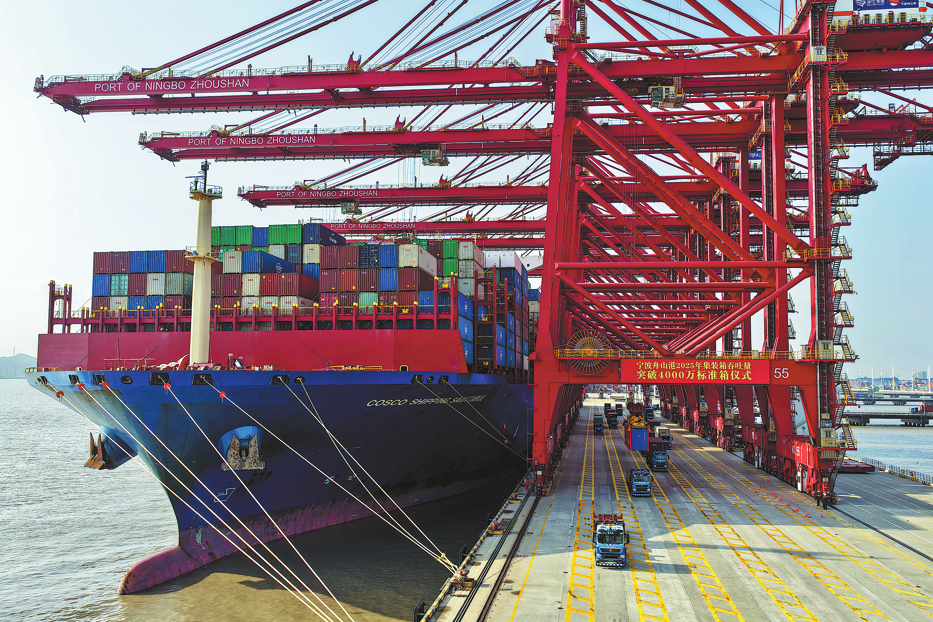
The dual circulation paradigm, with the domestic market serving as the primary engine of growth and domestic and international markets reinforcing each other, will be fully operationalized. With a middle-income population exceeding 400 million, the 15th Five-Year Plan targets sustained growth in the ultimate consumption share of GDP (56.6 percent in 2024). This requires a concentrated effort on policies designed to boost household income, strengthen the social safety net and foster a unified national market. By dismantling local protectionist barriers, standardizing regional regulations and upgrading logistics infrastructure, the 15th Five-Year Plan will seek to unlock the immense consumption potential of China's vast interior regions, ensuring internal economic balance and stability.
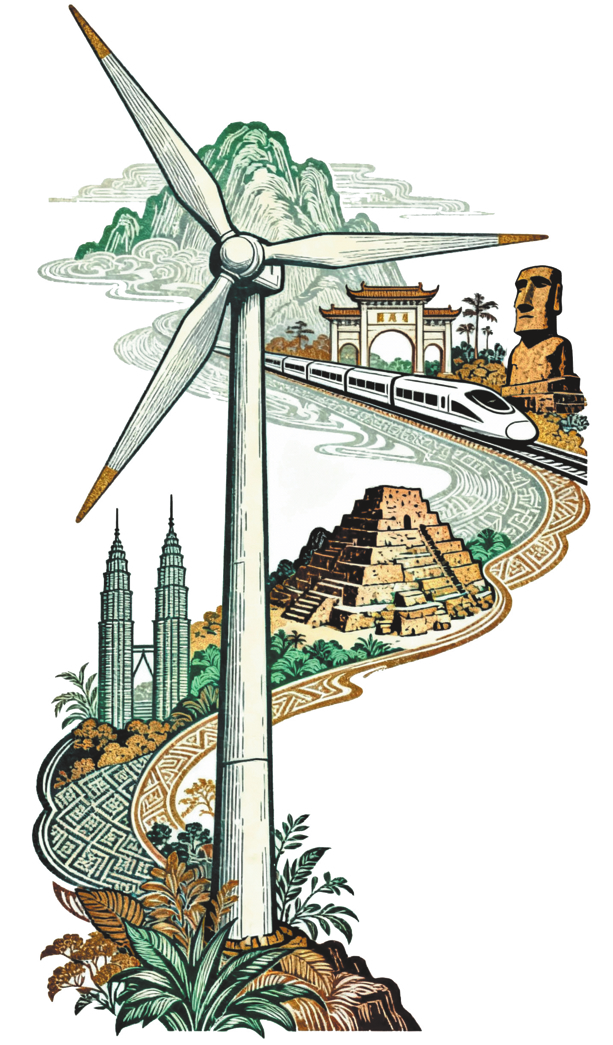
The 15th Five-Year Plan will also seek to deepen China's green transition as it is crucial for institutionalizing and accelerating the country's leading position in renewable energy. China, already the world's largest producer and installer of green technology, is poised to set a more aggressive target, potentially increasing the non-fossil fuel energy share in its primary consumption mix from the 20 percent target of the 14th Five-Year Plan (2021-25) to 25-30 percent by 2030. This transition will necessitate massive investments in solar, wind and advanced nuclear power. Meanwhile, the expansion and deepening of the national carbon emissions trading mechanism — whose cumulative trading volume reached about 700 million metric tons of CO2 by the end of August — will reinforce market mechanisms for decarbonization. A concurrent focus on developing the infrastructure for a comprehensive circular economy is aimed at drastically reducing resource intensity and waste.
The successful implementation of the 15th Five-Year Plan is intrinsically linked to global prosperity, particularly in the developing world. China's developmental trajectory offers a tangible alternative model, impacting Global South nations through industrial restructuring and green financing. As the 15th Five-Year Plan drives China further up the value chain, it accelerates the proactive offshoring of labor-intensive and lower-value manufacturing segments. It thus provides for sustainable industrialization through restructuring, a trend that presents a historic opportunity for countries across Southeast Asia, Africa and Latin America. Through the Belt and Road Initiative, now focused on high-quality cooperation, China is facilitating the export of capital, technology, and industrial knowhow. This includes Chinese investments in critical supply chain components, such as EV battery plants in Morocco and Indonesia, which directly help these nations secure strategic positions in the emerging green economy. This systematized alignment of China's outward investment with its domestic industrial upgrading fosters a new, opportune sustainable wave of industrialization in the Global South.
Global South nations face the daunting challenge of achieving industrialization without replicating carbon-intensive historical models. China's manufacturing dominance in green technology is the key to solving this dilemma, by providing the opportunity for financing the green leapfrog. The 15th Five-Year Plan ensures a continued, cost-effective global supply of essential components such as solar panels, wind turbines and energy storage systems. More critically, through multilateral institutions such as the Asian Infrastructure Investment Bank, China is directing significant finance toward renewable energy projects in developing countries, with green energy engagement now consistently surpassing fossil fuel investment. This enables countries to leapfrog traditional energy matrices and transition directly to a cleaner, more resilient power grid.
Concomitant with its domestic transformation, China has formalized its foreign policy vision through the Global Governance Initiative. The initiative represents the culmination of prior efforts — Global Development Initiative, Global Security Initiative and Global Civilization Initiative — establishing a coherent framework designed to reform the international system.
The Global Governance Initiative seeks to strengthen multilateralism by reaffirming the authority of the United Nations as the cornerstone of global governance and promoting sovereign equality among states. It explicitly advocates more effective multilateralism, standing in contrast to models perceived as selective or prone to instrumentalization. The initiative insists on an inclusive system where all countries function as equal participants in collective rule-making, ensuring international norms are written and applied jointly and equitably.
At its core, the Global Governance Initiative advances five guiding principles: sovereign equality, adherence to international rule of law, commitment to multilateralism, a people-centered orientation and an emphasis on tangible action. This framework is fundamentally designed to build a more equitable and representative international order by addressing the historical underrepresentation of emerging markets and developing nations aligned with the internationally agreed 2030 Agenda for Sustainable Development, and particularly Sustainable Development Goal 16. Implementation involves practical mechanisms to institutionalize a multipolar world. These include the Shanghai Cooperation Organization's decision to establish a development bank; the promotion of innovative financial mechanisms such as the Cross-Border Interbank Payment System and local currency settlements; and asserting leadership in strategic sectors, including renewable energy and satellite navigation (Beidou). Through a more proactive UN, the Global Governance Initiative aims to shape emerging international norms around fairness, inclusivity, solidarity and shared responsibility.
All told, the 15th Five-Year Plan and the Global Governance Initiative are two sides of the same grand strategy. The Five-Year Plan will provide the concrete operational mechanism — a stable, innovation-driven and green economy — that serves as an anchor for global economic predictability and drives down the cost of the global green transition. The Global Governance Initiative provides the philosophical and structural framework for this engagement, re-centering global governance on equality, fairness and inclusivity. By forging a path of high-quality, innovation-led growth at home, China is actively creating synergies that empower the Global South and stabilize the global commons. In an age of fragmentation, this integrated blueprint offers a powerful, alternative vision for a more equal, prosperous, sustainable and cooperative world.
The author, who holds a PhD in political sociology, is a senior United Nations official. The author contributed this article to China Watch, a think tank powered by China Daily. The views do not necessarily reflect those of the United Nations nor China Daily.
Contact the editor at editor@chinawatch.cn.