


China remains irreplaceable for Europe's growth: Experts
Deep industrial links keep companies anchored despite sharper tone from EU









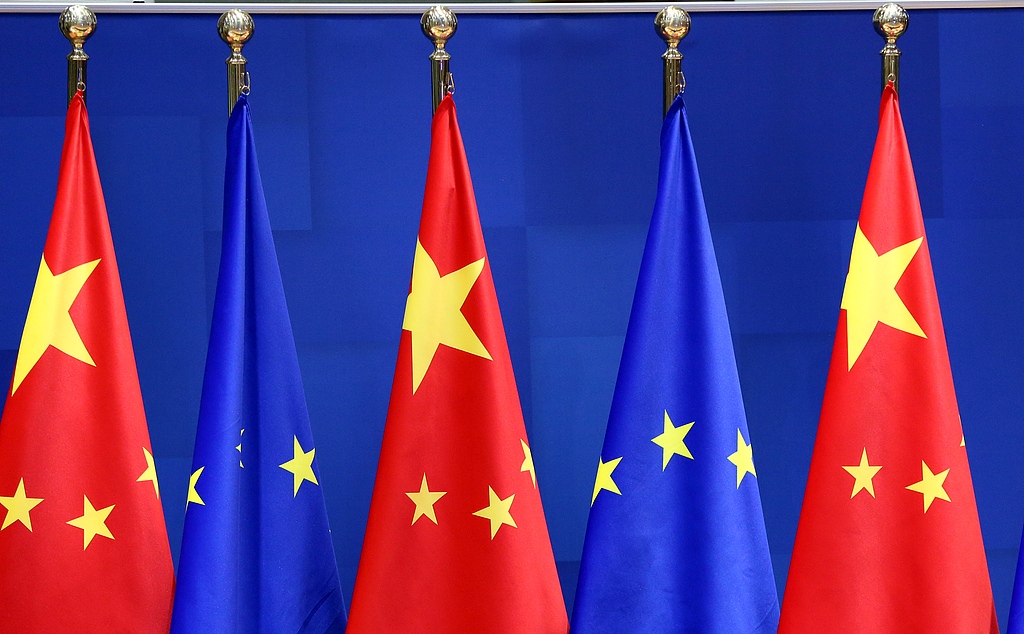
European companies remain optimistic about investing in China despite negative rhetoric from politicians on trade cooperation between China and the European Union.
China-EU economic relations are underpinned by strong internal momentum, experts said, and cooperation remains the only rational path forward, as protectionist policies would ultimately harm Europe's own development.
French President Emmanuel Macron recently warned that if the EU's growing trade deficit with China is not resolved, the bloc could be forced to take strong measures, including tariffs. Earlier, the European Commission released its economic security communication and a plan called "RESourceEU", which is widely interpreted as part of the EU's push to "de-risk" from China.
"The EU economic narrative toward China is entering an offensive phase, but in reality, it could not be a game-changer," said Jasna Plevnik, president of the Geoeconomic Forum Croatia.
Highlighting the lack of broad consensus among EU member states to implement "de-risking" policies, she said giving up a trade partner like China would be "catastrophic" for the bloc, as its economic stability and citizens' living standards are already in a downward trend, given the financial strain of supporting Ukraine.
Cui Hongjian, director of Beijing Foreign Studies University's Center for EU and Regional Development Studies, said that while economic security concerns are understandable, the exaggeration of dependency issues and the targeting of normal, mutually beneficial trade as objects of "de-risking" are irrational, reflecting a deeper "structural anxiety" in Europe about its declining competitiveness in the global value chain.
"Such misperceptions only deepen misunderstandings and run counter to the fundamental interests of both sides," Cui said. "China and the EU must recognize each other's irreplaceable value. Cooperation remains the only rational choice."
While the EU's narrative reflects growing anxieties about economic ties with China, the sentiment on the ground tells a different story. A survey released on Dec 2 by the German Chamber of Commerce in China found that 53 percent of companies plan to increase investment in China, with 93 percent intending to remain engaged in the Chinese market.
According to a survey released by the French Chamber of Commerce and Industry in China in June, more than 55 percent of respondents plan to keep investments stable, and a large majority of companies with R&D activities in China are considering expanding them.
The reasons for this continued commitment are multifaceted. Plevnik said China remains vital for major EU businesses because of its reliable market and fair treatment. Lower energy costs are attracting European manufacturing and technology investments, helping companies boost profits in ways not achievable at home, she said.
Inherent drivers
Cui highlighted the inherent drivers of China-EU economic cooperation. "Bilateral trade volume is substantial, markets are complementary, and industrial chains are deeply integrated. Despite rising trade barriers, Europe remains a relatively stable, rules-based partner. There remains irreplaceable potential for cooperation in consumer goods, primary products and industrial chain integration."
Official data showed that last year, China and the EU were each other's second-largest trading partner. The EU's new investment in China amounted to $6.79 billion, while that of China in the bloc reached $7.09 billion.
The German Chamber of Commerce survey also revealed that German companies are benefiting from knowledge and expertise developed in China, with 33 percent saying that knowledge flows from Chinese subsidiaries back to headquarters.
Jian Junbo, director of the Center for China-Europe Relations at Fudan University in Shanghai, said, "In the past, technology primarily flowed from Europe to China, but now it's a two-way flow."
This bi-directional flow fosters knowledge expansion, technological advancements and new market growth, benefiting European businesses as well, he said.
Cui said decades of cooperation have deeply intertwined markets, regulations and business cultures between China and Europe, creating a cooperative momentum and cost advantages unmatched by other emerging markets.
The experts said that to maximize the benefits of China-EU economic cooperation, Europe must move away from protectionism and pursue mutual gains through openness and innovation.
Jian said Europe's limited domestic market necessitates an outward-looking strategy to integrate with fast-growing markets such as China.
Plevnik said, "European leaders must devise a new strategy for diplomacy with China and reject its geopolitically motivated economic measures to compete with China and return to free market economic cooperation."