

Salt of the earth
1,100-year-old field transforms from ancient production site to green, agritourism hub










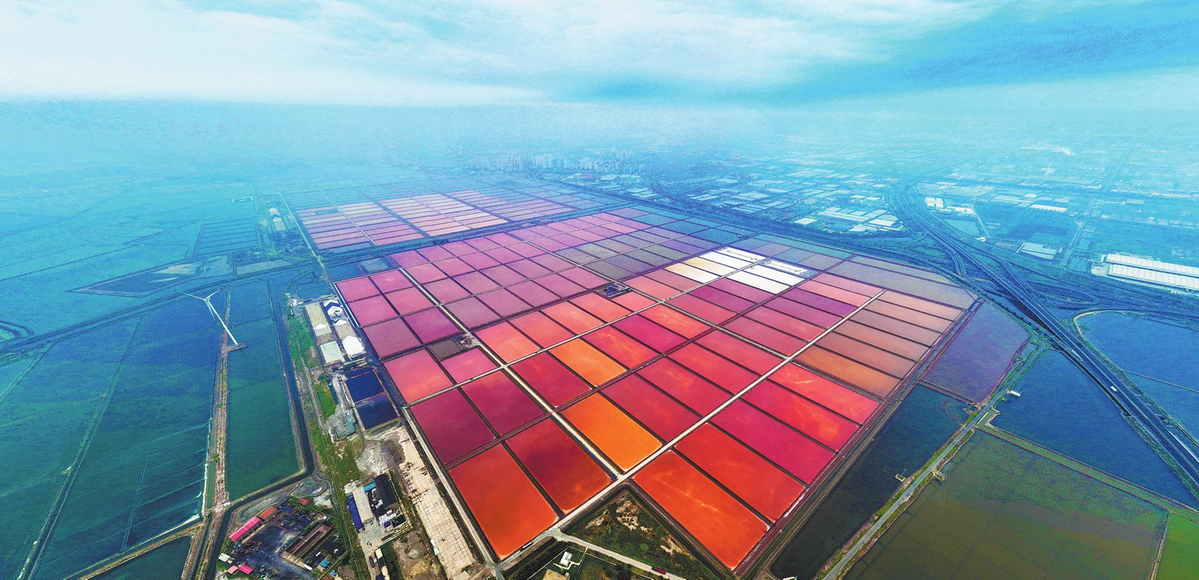
In the vast, sun-drenched coastal expanse of Tianjin's Binhai New Area in early autumn, the landscape shimmers. Here, where the waters of the Bohai Sea meet the land, lies the Tianjin Changlu Hangu Salt Field, a place that has been continuously harvesting salt for over a millennium.
Marking its 1,100th anniversary this year, the Hangu Salt Field is no longer defined by the arduous labor of ancient salt masters. It is now a leading-edge industrial park, a national cultural heritage site, and the host of the world's largest "salt-light complementary" power station — a stunning testament to China's push for green, high-quality development. The story of this field is the story of China itself: an ancient industry reimagined for the 21st century.
Established in 925, the Hangu Salt Field is one of the largest sea salt production bases in the Changlu salt-producing area, with an annual production capacity of 1 million metric tons.
From the ancient method of boiling seawater for salt to today's intelligent production and integration of cultural tourism, this salt field is pioneering a new path of high-quality development for traditional industries.