


Lawmakers review draft law to expand childcare services
Draft: Stricter entry, training and supervision mandated









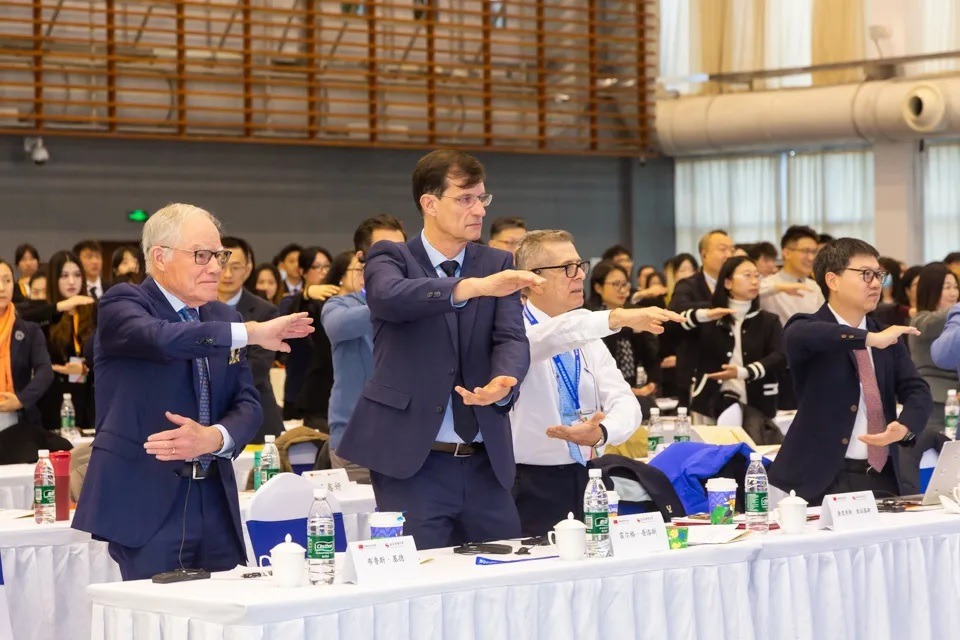
Chinese lawmakers have begun reviewing the nation's first draft law aimed at promoting childcare services and strengthening legal safeguards for children under age 3, as part of broader efforts to ease the childcare burden and support childbirth.
The draft law on childcare services was submitted for first reading on Monday at the ongoing session of the Standing Committee of the National People's Congress, China's top legislature.
Luo Shugang, chairman of the NPC's Education, Science, Culture and Public Health Committee, said the draft was initiated in 2023 and consists of eight chapters and 76 articles. It seeks to strengthen protection for children under 3 while addressing long-standing challenges, including uneven service quality, varying qualifications among caregivers and inadequate supervision.
The draft underscores government leadership in developing childcare services while encouraging broader public participation. It places particular emphasis on expanding affordable, government-subsidized childcare to reduce costs for families.
It calls on local governments to establish stable funding mechanisms, increase the supply of affordable childcare and gradually incorporate such services into the basic public service system.
To support sustainable development of the sector, local authorities would be required to secure land for new childcare facilities, ensure that new residential developments include childcare facilities aligned with local demographic needs, and streamline approval procedures for converting existing premises into childcare centers. Local governments are also encouraged to explore subsidy systems or direct government purchases of services.
Mao Zhuoyan, a professor at the School of Economics at Capital University of Economics and Business, said the draft represents a landmark step toward consolidating fragmented childcare-related regulations into a unified legal framework.
"One of the most important highlights is its clarification of childcare as a government-led public service," Mao said. By defining the government's leading role and paving the way for affordable childcare to become part of the basic public service system, the draft reframes early childhood care as a shared national responsibility rather than a private family burden.
"This provides a solid legal basis for introducing support measures, such as lowering operating costs through land or tax incentives or offering per-slot subsidies to providers, ultimately making services more affordable and accessible for families," she said.
As part of national efforts to ease financial pressure on households and encourage births, China has significantly expanded childcare services in recent years. The number of nursery care slots for children under 3 has risen to 4.73 per 1,000 people recently, up from 2.03 at the end of 2021.
However, a report released during an NPC Standing Committee session in September last year said that while more than 30 percent of families with young children need childcare services, the national enrollment rate averages only 7.86 percent. The report noted that most childcare institutions are privately run and located in commercial buildings, and 75 percent of their earnings go toward rent and labor costs.
In 2023, private providers, which make up nearly 90 percent of the market, charge an average monthly fee of 1,978 yuan ($280) per child, with costs reaching as high as 5,500 yuan in first-tier cities, putting quality care beyond the reach of many families.
"The draft law will boost confidence among various stakeholders to invest in the sector while reassuring families seeking affordable childcare," said Mao, the professor.
The draft also sets stricter entry requirements for providers, mandates stronger training for caregivers, improves service quality standards and strengthens routine supervision to better protect children's well-being.
It requires childcare institutions to conduct mandatory background checks on staff members before employment and annually thereafter, and to immediately suspend or dismiss anyone found to have a history of violence, trafficking, sexual assault, abandonment or abuse.
Childcare workers are prohibited from engaging in any conduct that harms children's physical or mental health, and institutions must report suspected abuse or safety risks to authorities.
Mao noted that the sector faces a serious shortage of qualified professionals due to relatively low pay and limited career advancement opportunities. She said raising salaries, improving incentives and strengthening vocational education will be critical to attracting and retaining a stable workforce.
wangxiaoyu@chinadaily.com.cn






- Shanxi ends province-wide blanket fireworks ban
- Audit: China fixes bulk of fiscal problems tied to 2024 budget
- China reports major gains in circular economy
- Chinese lawmakers review draft revision to banking supervision and regulation law
- Top legislature to study draft laws on environment, ethnic unity, national development planning
- Administrative organs must secure people's interests: senior judge