Tuesday was the eighth day of the 12th month on the Chinese lunar calendar. I first became aware of the day as a traditional festival - called laba, or the eighth day of the winter month - when I was working in a factory 30 years ago.
At lunch time, a few of the elder co-workers opened their lunch boxes, and out came the fragrant smell of well-simmered rice porridge mixed with beans, nuts and dates.

And they talked about making pickled garlic or green vegetables after work. They said the vegetables or garlic pickled only on that particular day would turn out a bright green.
At that time, I wondered why there should be such a fuss over the laba festival. Growing up during the "cultural revolution" (1966-76), when almost all things traditional were considered outdated or even decadent, I had almost become oblivious to most of the traditional festivals throughout the year.
Spring Festival was perhaps the only exception, when each family could buy a bigger ration of meat with additional rations for fish, peanuts and sunflower seeds.
I really started to value and celebrate these traditional festivals a few years later when I began to write about Chinese culture and had to re-educate myself on how far back these festivals dated, where they originated, what they meant and for what or whom the rituals were established.
It is really heartening that, despite the dramatic changes and modernization that our country has undergone over the past three decades, people have come to treasure many of our traditions more. Some people may have a grudge against the excessive commercialization of these traditional festivals, but I believe the business promotions have at least worked to enhance people's awareness.
Most of the traditional Chinese festivals are celebrated with feasts. This is understandable because centuries ago, when hunger sometimes ruled most of the year, people saved to be able to have feasts or particular type of foods to mark the festivals.
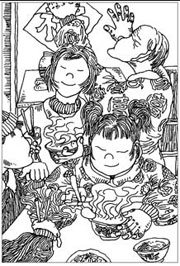
It is no wonder that on Tuesday, a lot of people were buying rice, nuts, dry fruit, and beans from supermarkets and stores. A food store at Beixinqiao in Beijing sold 300 kilos of the multiple ingredients for the laba porridge on Monday and Tuesday. On a regular day, it only sells about 25 kilos.
A few thousand went to the Yonghegong Lama Temple and other monasteries to make offerings for peace and harmony.
Whatever way people marked the laba festival, we heard very few complaints about the price for a bowl of porridge or a kilo of ingredients. Perhaps it was not easy for businesses to charge more for the traditional porridge that every household is capable of making.
However, when it comes to mooncakes, few families know how to make them. Businesses have taken advantage of this fact and have sold the delicacies at ridiculously high prices, which seem to point to malpractice.
Now that we have celebrated laba festival, we are now looking forward to the Lunar New Year, when we are supposed to have a lot more feasts. In fact, it is reported that almost all popular restaurants have been booked out for the Lunar New Year Eve dinner in major cities across the country.
Let us beware of excessive eating and over-pricing.
E-mail: lixing@chinadaily.com.cn
(China Daily 01/17/2008 page8)